
Education Against Inherited Ignorance
The Color PurpleThis thread examines education as a means of agency for Celie, Nettie, and the girls in Olinka, while showing how institutions restrict who may learn.
increasing Bearing strength in each event
 decreasing
Bearing strength in each eventdecreasingNettie Defends Celie's Mind

Nettie Defends Celie's Mind
A Sister's Advocacy
Nettie argues that Celie is smart and should continue studying. Their father dismisses both the teacher and Celie's ability, ending her formal schooling.
The moment establishes education as a contested resource controlled by adults who determine which children deserve opportunity.
Learning Despite Exclusion
Celie later remembers that she struggled to retain lessons, but Nettie continued teaching her what she could. Their shared study keeps learning connected to affection rather than institutional approval.
Nettie's faith in Celie's mind becomes an early counterweight to repeated claims that Celie is stupid.
Books and Self-Education

Books and Self-Education
A Wider History
Nettie reads about African civilizations, slavery, and the history omitted from her early schooling. She recognizes that her education has left major gaps in her understanding of Black life.
Her reading changes how she sees the past and her own identity.
Learning as Responsibility
Nettie studies so she can teach and work in Africa, not simply to collect facts. She becomes more conscious that education can challenge the stories powerful people present as truth.
The knowledge she gains later reaches Celie through the letters Albert hid.
A School for Boys
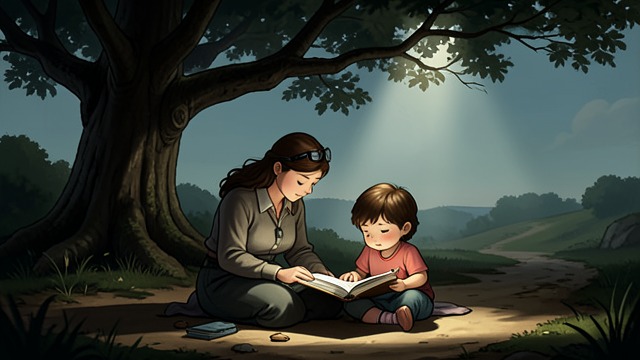
A School for Boys
A Local Rule
Nettie finds that Olinka parents generally do not send girls to school. One mother argues that a girl's value comes through her future husband and children.
The rule limits girls' futures while appearing to belong naturally to community life.
Lessons Shared Anyway
Olivia shares what she learns with Tashi. Their private lessons show how friendship can carry education through a social barrier.
Nettie's work supports possibility, but the girls themselves make the learning durable.
Roads, Schools, and Power
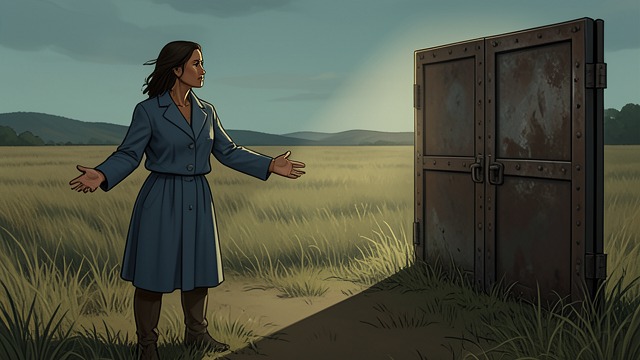
Roads, Schools, and Power
A School Cannot Stop a Road
Nettie's school is destroyed as roadbuilders clear Olinka Village for plantation development. The community loses an educational space at the same time it loses homes and fields.
The episode shows that local learning depends on land and security, not only on teachers.
Limits of Instruction
Nettie continues teaching after relocation, but children must work and families struggle to obtain food and water. Education is vulnerable to the conditions created by colonial rule.
The conflict challenges any belief that schooling alone can undo material dispossession.
Knowledge Carried Home

Knowledge Carried Home
A Changed Family
Olivia and Adam return as educated adults shaped by life in Olinka. Their knowledge and independence distinguish them from the children Celie last saw.
The sisters' letters have carried lessons across oceans, but the returning family also brings knowledge formed through lived experience.
An Open Future
The reunion joins generations with different schooling, languages, and histories. Celie's work and Nettie's education meet in a home where learning can continue without a father's permission.
Education becomes a shared resource rather than a privilege controlled by one authority.
When their father removes Celie from school
After Nettie joins the missionary group
During Nettie's first years at Olinka Village
When colonial construction destroys the mission school
During the final family reunion
